Securing funding is critical to your nonprofit’s mission, but traditional grant writing drains valuable time and resources. That’s where AI grant writing tools come in—empowering organizations to research, draft, and polish winning proposals in a fraction of the time.
While 92% of nonprofits have adopted artificial intelligence, only 7% report major improvements. That means finding the right software and having a solid implementation plan is paramount. But with so many options available, which platforms actually deliver results?
In this guide, we break down the top 15 solutions tailored for nonprofits. Whether you are looking for a comprehensive, purpose-built platform trained on successful applications or a versatile assistant for research and editing, we’ll help you choose the exact technology you need to streamline your workflow and unlock new revenue streams.
Key Takeaways
- Implementing AI grant writing tools can drastically reduce the hours your nonprofit spends researching and drafting complex proposals.
- The current software market includes a mix of versatile generative AI for basic brainstorming and purpose-built platforms trained specifically on successful grant data.
- Specialized grant software like Grant Assistant can automatically compare your drafts against strict funder requirements to catch critical gaps before you submit.
- While AI handles the heavy lifting of outlines and initial drafts, your team's human expertise and emotional storytelling remain essential to winning the award.
- Integrating the right technology empowers your organization to submit more high-quality applications and sustainably unlock new revenue streams.
Understanding the types of AI tools for grant writing
AI grant writing software can take a few different forms, so it’s important to understand their distinctions and purposes before investing in any addition to your grant writing toolkit.
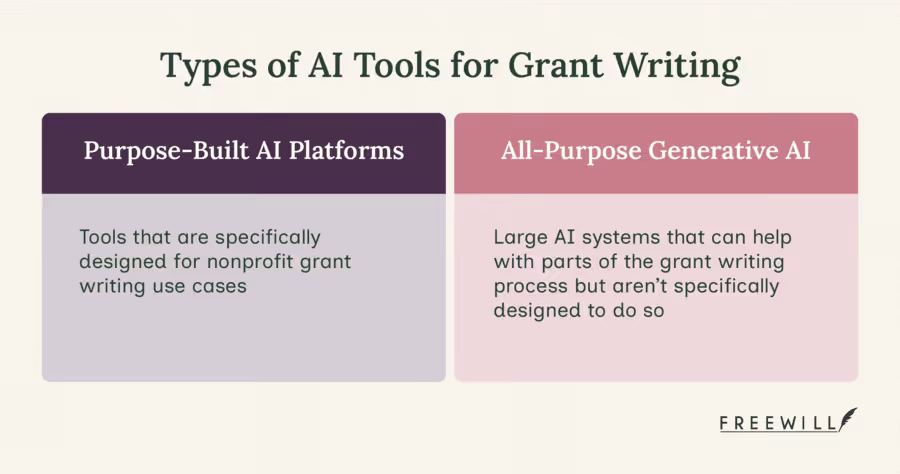
The market generally divides into two main categories: purpose-built AI grant writing tools and general AI tools that can help with grant writing:
Purpose-built AI grant writing tools
Purpose-built platforms (like Grant Assistant) are explicitly designed and trained to support the grant writing process. Within this category, solutions span a wide spectrum of functionalities. Some comprehensive tools assist with multiple stages of the proposal lifecycle—from initial research to final drafting and compliance checks. Other purpose-built tools are highly specialized, focusing on streamlining ancillary tasks that support your proposals, such as complex data analysis, interview transcription, or proofreading.
General generative AI tools
General or all-purpose tools (such as ChatGPT) are the broad generative AI chatbots you have likely used before. While these platforms can be extremely helpful for basic brainstorming and drafting, they are not explicitly trained for grant writing or the nonprofit sector. It is important to understand their limitations: they carry a higher risk of generating generic or inaccurate responses, meaning their outputs require intensive human review and fact-checking.
The best AI grant writing tools with comprehensive grant writing functionalities
If you’re looking for AI grant writing software, chances are you want something that can help you tackle the heftiest parts of your grant writing workflow—research, drafting, and finalizing your proposals.
While no tool can (or should!) fully replace your human judgment and reasoning when writing grants, a handful of solutions stand out as the most comprehensive and effective AI tools for researching and writing grant proposals. Here are our picks for the top options available today:
Grant Assistant
Grant Assistant by FreeWill is a comprehensive AI platform designed to help mission-driven organizations discover and draft high-quality proposals in a fraction of their normal time. What sets it apart is its specialized training: the platform’s proprietary AI models have been trained on more than 7,000 winning grant proposals. It also learns from your nonprofit’s ideas, research, and past applications to deliver standout proposals that stay true to your organization’s voice.
Here’s how our purpose-built grant writing tools help you go from a blank page to a high-quality draft within minutes:
- Accelerate decision-making. The platform summarizes each funding opportunity into a brief, helping you make fast “go/no-go” decisions.
- Draft with precision. Generate proposal outlines tailored to specific funder requirements, whether it’s a simple form or a complex narrative. You can also adjust the tone of voice to match your organization’s brand.
- Unlock institutional knowledge. The platform summarizes relevant data and insights from your past proposals, annual reports, and other documents, so you never have to dig for supporting details.
- Ensure 100% compliance. Grant Assistant scans your draft and compares it to the funder’s requirements to catch gaps and overlooked errors before you submit.
- Refine and collaborate. Overcome writer’s block with an expert AI chatbot that sparks ideas for strengthening your proposal, and collaborate with your team directly in the platform.
Grant Assistant’s founding team includes former senior leaders at top nonprofits, USAID, and UN agencies who understand the diverse grant funding landscape. They have experience with everything from complex development proposals to smaller-scale foundation and community programs. The result is an expert-built, adaptive, and highly customizable platform that meets any nonprofit’s grant writing needs.
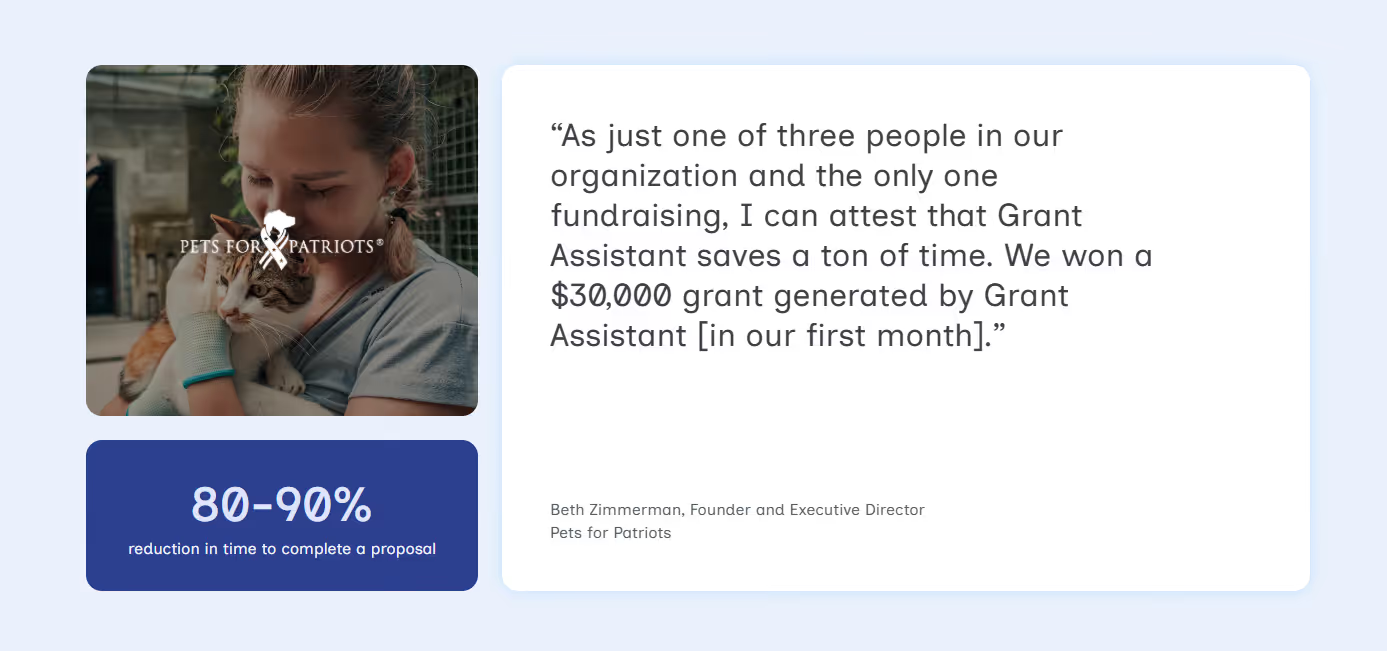
With Grant Assistant, nonprofits are seeing transformative results. For example, Pets for Patriots reported an 80–90% reduction in the time needed to complete proposals and won a $30,000 grant within their first month of using Grant Assistant.
The platform is also built with enterprise-grade security, ensuring your data is never used to train public AI models. Learn more about Grant Assistant’s cutting-edge features or contact the FreeWill team to set up your own demo to test the platform.
Grantable
Grantable is an AI grant writing platform that also stands out in the market for its ability to streamline several core points in the grant writing process.
It offers a range of features to help nonprofits, institutions, and grant writing agencies quickly draft professional grant proposals that adapt to funder requirements and match their correct tones of voice. Upload files, generate sections, collaborate with the AI, and create a polished proposal in a fraction of the normal time.
Important to Note: Grantable offers fewer built-in research and analysis tools than similar platforms like Grant Assistant. Its website also does not discuss the material used to train the Grantable AI system, meaning it may require more hand-holding to generate consistent, context-specific responses.
Instrumentl
Instrumentl has long been an industry leader as a grant research database, helping nonprofits find, organize, and manage their funding opportunities every day.
The platform bridged the gap between grant research and writing by launching Instrumentl Apply, a fully integrated AI drafting module. This means Instrumentl's AI tools are no longer just in development—they are live and functional. What makes Apply stand out is that its AI is trained directly on Instrumentl's massive proprietary database of historical 990s and funder insights. Furthermore, it securely learns from your organization’s past proposals to ensure new drafts match your unique voice and goals.
If you already know, trust, and use Instrumentl for your grant research and management, utilizing their built-in AI grant writing tools can be efficient. It allows you to keep your entire grant lifecycle—from discovery to the final draft—housed within one platform.
Additional AI tools that support grant writing workflows
This last category of AI grant writing tools is diverse. It includes platforms built for various purposes that can supplement your toolkit and help speed up your grant writing. Note that these tools are not purpose-built for drafting grant proposals.
Grant Orb
Grant Orb bills itself as a tool for quickly generating complete grant proposals in minutes. It offers upload and text generation features similar to those of Grantable, as discussed above.
However, this platform's full utility and flexibility may be limited, and it’s unclear how its system is trained or whether it has deep nonprofit-specific knowledge. With these caveats in mind and an understanding that you’ll still need to carefully curate and refine your proposals, it may still be a viable way to streamline your grant writing work.
Grantboost
Grantboost offers the same functions as Grant Orb but at a more accessible price point. Its website is light on details, so it also brings the same potential concerns about the depth and specificity of its training materials.
If you’d like to learn more about Grantboost, we recommend exploring its website and contacting the vendor directly to learn more and see the product in action.
Quick note: Understanding the roles and limits of AI grant writing tech
Remember, grant writing is a complex process with many stages and complex logical steps. The goal of adopting AI tools should never be to fully outsource your grant writing. AI is best used to handle straightforward tasks, make new connections, and save time.
Your human reasoning, expert context, and emotions are all essential to a successful grant proposal, too.
By approaching AI tools (whether one of these grant writing-specific platforms or a more case-specific tool) as a collaborator, you’ll remain in the driver’s seat and ultimately do the best work for your mission. Stay aware of your tech’s real features, functions, and limitations. Reach out to vendors to discuss them and ask for real examples of their work.
AI grant writing tools for specific use cases
How else can you use AI tools for grant writing? Let’s look at the top platforms for more limited or specific use cases in your grant writing workflows.
Broad generative AI tools
Next, we’ll review a few all-purpose generative AI platforms that you might use to support your grant writing projects.
These can help with many different tasks, but they should be used in very limited or focused ways. That’s because these general tools can easily provide incorrect or misleading information. However, they’re still very useful when you understand their limitations, and, best of all, they’re highly accessible—each platform is free and/or offers inexpensive paid plans with additional features.
ChatGPT
OpenAI’s ChatGPT is the industry leader in all-purpose generative AI. It excels at helping you quickly generate text, summarize documents, analyze data, and troubleshoot problems.
Claude
Claude is a lesser-known but equally powerful and functional generative AI platform. Some users have found it to provide consistently better outputs when generating text about technical topics.
Gemini
Google’s generative AI chatbot, Gemini, is another reliable option for all-purpose AI tasks that can streamline your grant writing, and it works seamlessly with all other Google products like Sheets and Docs.
Important to Note: When using broad generative AI tools, remember that they’re not trained specifically to help nonprofits or write grants. Pay close attention to how you prompt them for responses, ask for corrections and changes, and carefully review and refine all outputs. Consider relying on them for your most straightforward tasks, such as visualizing data and helping you come up with ideas rather than finished products.
AI tools to help with research and logistics
This last category of AI grant writing tools is diverse. It includes platforms built for various purposes that can supplement your toolkit and help speed up your grant writing.
Perplexity
Perplexity is akin to an AI search engine that can quickly generate answers to questions. It stands out among similar platforms because of its diverse training sources and citations, making it generally more reputable and helpful for the grant research process. Use it to learn more about topics and gather information and data to enrich your grant proposals.
Coefficient
Coefficient is built specifically to help with data analysis and visualization. It can integrate directly with your data tools (or analyze uploaded data) to generate reports, create graphs and live dashboards, and uncover hidden trends. Coefficient’s powerful tools can help you analyze and summarize data for grant proposals and regular reports to funders post-award.
Fireflies
Fireflies is an AI tool that transcribes accurate notes from audio and video. Grant writing often involves meeting with many people internally and externally to discuss your project, ask for documents, get answers to key questions, and more. AI can help ensure you capture all the details, and FireFlies even integrates directly with several leading project management platforms like Slack and Asana to create reminders from conversations automatically.
Jasper
Jasper is a generative AI platform designed specifically for marketing use cases, so while not directly related to grant writing, it can help quite a bit in some content creation areas. Its top features allow you to closely train the AI model on your organization’s voice and visual identity. Jasper Studio also makes it easy to create your own custom AI tools using its underlying system.
With some tech know-how and a clear understanding of what you need, Jasper could be a helpful part of your AI toolkit—just be aware that it’s trained for for-profit contexts and will need hand-holding to generate consistently useful text for grants.
Grammarly
Grammarly, the well-known spellcheck plugin, has many built-in AI features that could strengthen your grant writing. Besides checking for typos and grammatical improvements, the system can also screen your text for tone, clarity, and brand alignment. You can also prompt Grammarly to improve or suggest particular changes, for example, trimming down a section you’ve written to meet a funder’s guidelines.
Tome
Tome is an AI platform designed for sales and account management but comes with one feature that may be particularly useful for grant writers: AI slideshow generation. If you meet with team members and funders to discuss plans and pitch ideas, Tome could be an easy way to boost the visual professionalism of your presentations and streamline your work.
Otter
Otter is another notetaking and transcription AI tool that can improve your grant writing workflow. Use it to quickly generate meeting summaries, combine meeting transcriptions with other notes, and send lists of action items. It integrates with top video conferencing tools, Salesforce, HubSpot, and more, making it an easy addition for many organizations looking to improve communication.
Maximize your revenue with FreeWill’s tools for individual giving
While leveraging AI grant writing tools is an excellent strategy for securing institutional and foundation funding, long-term financial resilience requires a diversified revenue stream. Beyond grant software, FreeWill offers comprehensive solutions designed to help your nonprofit unlock transformational gifts from individual donors.
The Smart Giving Suite
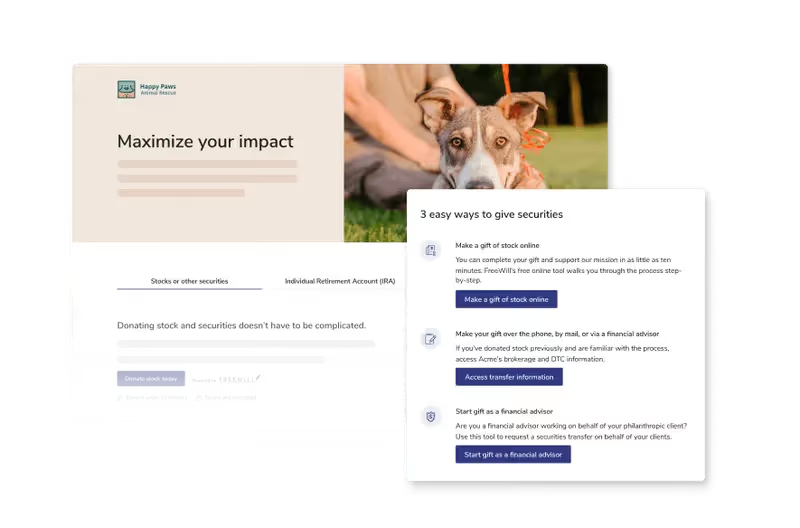
Non-cash assets represent some of the most significant, yet untapped, opportunities for individual fundraising. FreeWill's Smart Giving Suite empowers your organization to easily accept high-impact, real-time, tax-advantaged gifts, such as:
- Stocks and securities: Seamlessly accept donations of stocks, bonds, ETFs, and mutual funds.
- Donor-advised funds (DAFs): Provide your supporters with an intuitive, frictionless way to recommend grants directly from their DAFs.
- Qualified charitable distributions (QCDs): Make it simple for older supporters to donate directly from their IRAs, satisfying their required minimum distributions while supporting your cause.
- Crypto: Simplify the process of accepting cryptocurrency to capture a new, highly engaged demographic of tech-savvy donors.
Hear about how NOCO Humane uses FreeWill’s Smart Giving Suite to educate their donors about non-cash giving:
The Planned Giving Suite
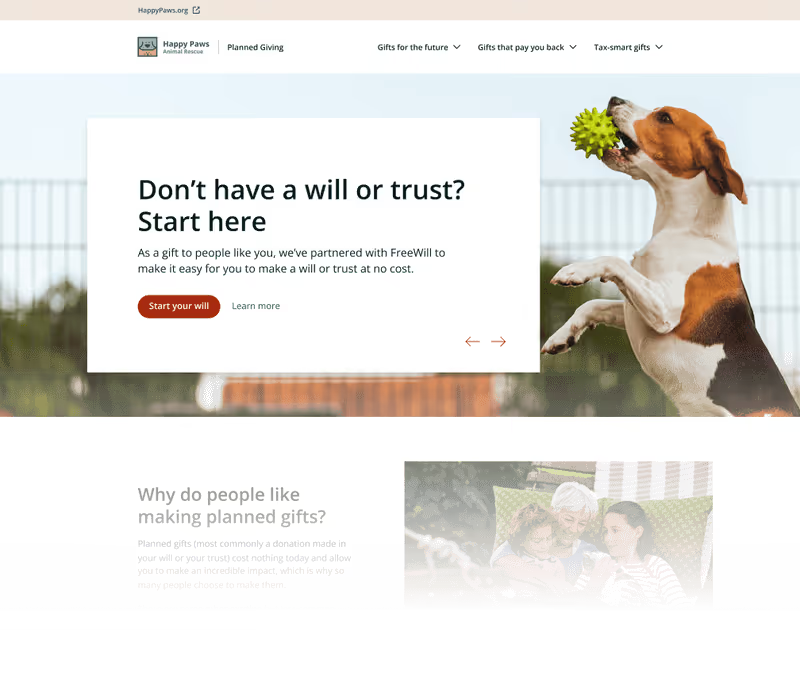
Prepare for your organization’s future by securing powerful legacy gifts. FreeWill's Planned Giving Suite helps you scale your legacy program by providing your supporters with a free, intuitive online estate planning platform built with gentle nudges toward charitable giving.
Here’s how our platform equips you to inspire more legacy donations:
- Will creation tools: Allow donors to quickly create legally valid wills, revocable living trusts, and beneficiary designations that seamlessly include bequests to your mission.
- Planned giving microsites: Educate your donors with a custom, comprehensive digital hub that explains complex legacy giving options in a clear, low-pressure environment.
- Featureships: Acquire brand new, high-affinity legacy donors by placing your organization's mission front and center for thousands of will-makers using the FreeWill platform.
Curious how these tools empower real nonprofits to secure more legacy gifts? Hear how Susan G. Komen grew legacy gifts through FreeWill’s National Featureships:

Key reminders when using AI grant writing software
As discussed above, it’s important to understand the distinctions between different types of AI tools and their limitations before making an investment for your organization.
If you want AI tools built specifically for grant writing, look for options that are truly purpose-built, expert-trained, secure, private, and relevant to your needs.
Grant Assistant checks all these boxes and more. We’re confident it’s the best AI grant writing software available today. However, you should still take stock of your nonprofit’s unique needs—what do you want to accomplish, and what can you reasonably take on?
Remember, AI is best when used as a collaborator, not as a full replacement for your own careful thought processes. If you don’t have the capacity to actively manage and execute an influx of new grants, your AI won’t be as much help once the funding (and its requirements) arrive. Take the time and attention to choose the right opportunities for you, use AI to apply for more of them more efficiently, and boost your impact and capacity in a sustainable way.
Learn more about Grant Assistant or request a walkthrough of the platform. Or, keep exploring with additional resources about how to use AI to boost your productivity and impact:
- Webinar: A deep dive on five practical AI uses for nonprofit fundraising
- Can you use AI for grant writing? What you need to know
- Top 10+ grant writing software picks and supplemental tools
- Grant management software: Buyer’s guide & top-rated options